
















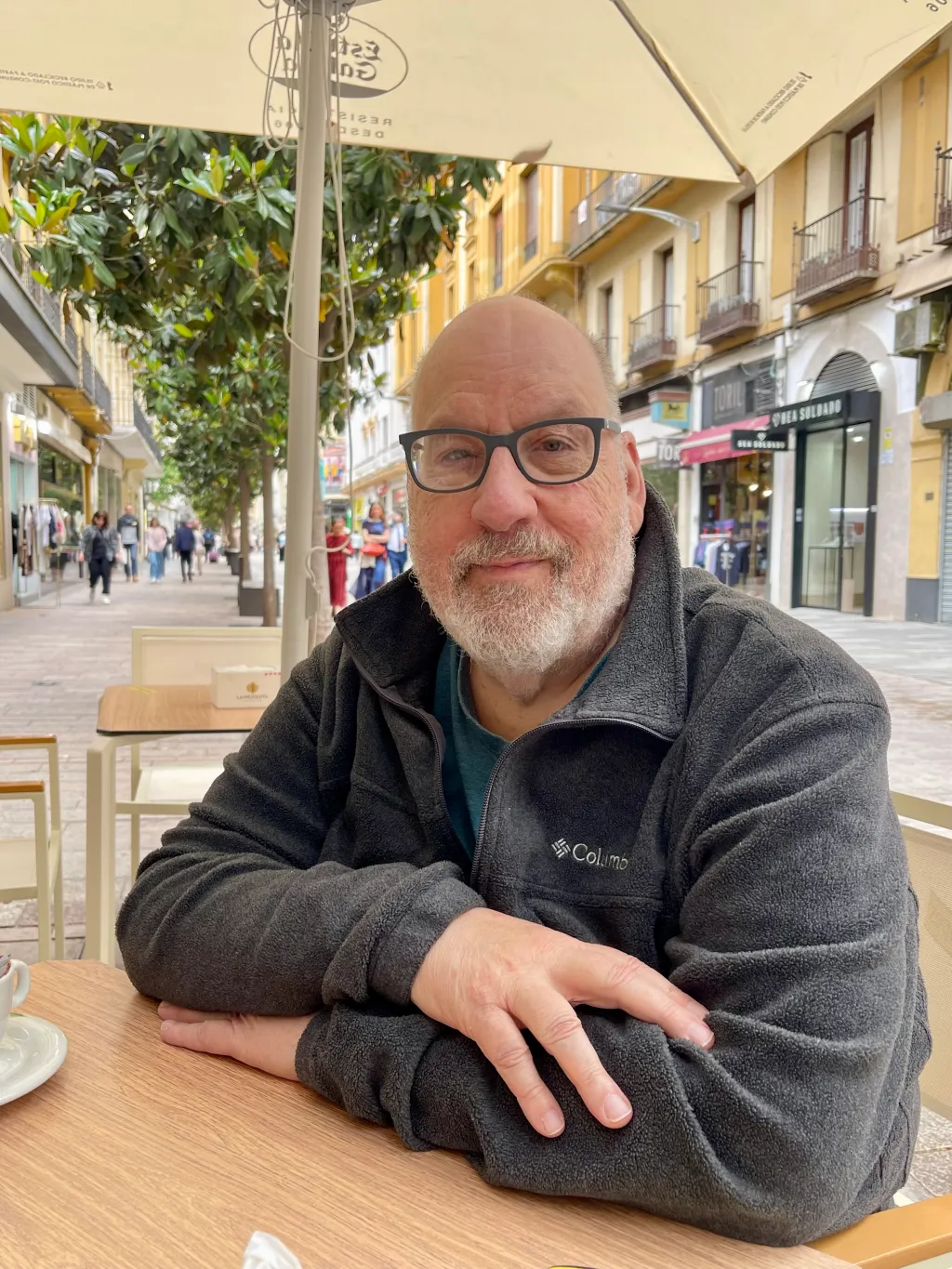
I did not go to Spain looking for a new life.
At 75, you do not usually imagine that a two-week vacation will overturn everything you thought you knew about health, aging, cities, and the country where you have spent your entire life. You certainly do not expect a city founded over 2,500 years ago to expose the failures of modern America in less than 14 days.
But Córdoba did exactly that.
Every morning in Spain I took my blood sugar reading, almost out of habit. I am a Type 2 diabetic, and for years those numbers had been part of the background anxiety of everyday American life. You monitor, adjust, medicate, worry, repeat. Like millions of Americans, I accepted deterioration as normal aging.
Then something strange happened.
The numbers dropped.
Not a little. Dramatically.
My blood pressure improved. My muscles felt stronger. I had more energy. I slept better. I lost weight without trying. And the most shocking part was this: I was making no conscious effort whatsoever to “exercise.”

I was simply living.
In Córdoba, life itself required movement. We walked everywhere because the city was designed for human beings rather than automobiles. Without planning to, I was walking six to eight thousand steps every day just carrying out ordinary tasks: buying groceries, meeting friends, wandering narrow streets, stopping for coffee, crossing plazas, climbing ancient stone lanes polished by centuries of footsteps.
No gym membership. No treadmill. No suburban guilt ritual about “getting exercise.” Just life.
And suddenly I understood something deeply unsettling.
The American lifestyle itself had become my illness.
Back home in Connecticut, nearly every aspect of daily life revolved around the automobile. To buy food, you drive. To meet friends, you drive. To walk safely often requires getting in a car first and driving somewhere designed for walking. The body becomes unnecessary to ordinary existence.
Then comes the food itself — industrialized, processed, engineered for shelf life, profit, addiction, convenience, and endless consumption. Even the healthcare system often feels organized less around preventing illness than around managing profitable chronic disease.
In Córdoba, I ate bread, olive oil, jamón, cheese, fresh vegetables, wine, simple meals prepared from ingredients that still resembled actual food. Nothing screamed “diet.” Nobody seemed obsessed with nutrition. Yet the entire culture quietly supported health.
Meanwhile America surrounds you with systems that quietly undermine it.
What stunned me most was realizing that Córdoba solved many of these problems centuries before the invention of the internal combustion engine. The city’s design — dense, walkable, social, shaded, scaled to the human body — emerged from thousands of years of accumulated human experience. Its streets were not engineered for quarterly profits or traffic throughput. They evolved for living.
America, by contrast, often feels engineered against human biology itself.
Our suburbs isolate us. Our roads divide us. Our food inflames us. Our work exhausts us. Our healthcare monetizes us. We have built an environment where remaining healthy requires extraordinary conscious effort against the grain of everyday life.
In Córdoba, health happened accidentally.
That realization changed everything.
When I returned home to Southport, Connecticut, I looked around our beautiful condominium with entirely different eyes. It was attractive, comfortable, expensive — and for me personally, dangerous. A lovely trap. A place where inactivity, stress, driving, isolation, and overconsumption quietly accumulated year after year.
For the first time in my life, I understood that geography can be medicine.
Or poison.
So my husband and I made a decision that would have seemed impossible only weeks earlier: we are leaving.
Not because we hate America. Not because Europe is perfect. But because at 75 years old, I no longer have the luxury of pretending environment does not shape survival.
A city built 2,500 years ago gave me something modern America could not: the feeling that everyday life itself might help keep me alive.
Stephen Paul Delco is now splitting his time between Connecticut and Spain. He writes about his travels.